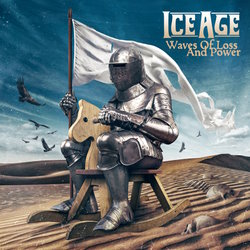
Ice AgeWaves Of Loss And Power
Reviewed 2 March 2023
9out of 10
★★★★★★★★★★
- Songs8
- Length66:53 minutes
- Genreprogressive metal
- LabelSensory / The Laser's Edge
Even though Dream Theater pretty much by themselves defined the sound of modern progressive metal, it was the record label Magna Carta which especially in the nineties was a safe haven for upcoming prog metal bands. Maybe because other artists like Shadow Gallery, Magellan and Explorers Club released their albums a few years earlier, I didn’t have Ice Age so much on my radar. They released two exceptional albums, The Great Divide in 1999 and Liberation in 2001, and especially the latter was well regarded. A self-titled EP made little impact in 2004, and then it was quiet for nearly twenty years. The musicians stayed in contact, started working on new ideas and now they are back with their third longplayer Waves Of Loss And Power.
The current line-up has been stable since 2001, and it’s incredible how the quartet makes you feel as if the last two decades just didn’t happen. The eight songs make it well over an hour, and cover a large enough ground, although emphasising their early prog metal sound. The seven-minute-long opener and first single The Needle’s Eye is a dynamic punch in your face, combining crushing rhythms, complex guitar exercises and a catchy chorus into something which made the early years of prog metal so enticing and exciting. The following Riverflow is at eleven minutes a longer track, feels overall a little tamer but still surprises with unusual compositional surprises that always take me back to the song. Perpetual Child, Part II: Forever is one of the album’s quarter hour epics and delivers exactly what you would expect from an early nineties prog metal band: different movements, daring songwriting, powerful melodic vocals and a sense of adventure that many modern prog bands just lack. Part I of the song could be heard on the band’s debut. The second single Together Now, at eight minutes probably too long for commercial radio airplay, is something that could have come from Dream Theater’s second album. This really is a trip down memory lane.
The next two songs are shorter and less progressive, flirting with alternative rock. All My Years works especially well, reminding me of the early King’s X, while Float Away has a similar mood but comes with less upbeat and more atmospheric feeling. The album ends with To Say Goodbye, Part IV and V. Parts I to III could be heard on the band’s first two albums. Part IV: Remembrance is a two-and-a-half-minute short piano piece, working as a niece segue into the quarter hour long closer Part V: Water Child, once again one of Ice Age’s unmistakable trademark epics.
The great thing about Waves Of Loss And Power is that the band members haven’t lost any of their power. The musicians still play on a technical level that is hard to beat, and yet never neglect the melodic components. The vocalist also still sounds like he used to, despite now being probably nearly double the age he was when Ice Age started. There is of course always the spectre of Dream Theater behind this genre, but Ice Age also used to draw parallels to Saga, giving them a sometimes less metallic sound. This comparison may have been due to similar vocals. Shadow Gallery may also be named if you need more to make up your mind. But in the end, Ice Age have always been their own masters and can stand quite comfortably next to the aforementioned bands. Fans of the sound of early progressive metal will be delighted, and even if the band is no longer signed to Magna Carta, their new home at Sensory / The Laser's Edge seems a perfect fit for the Long Island, New York prog metal quartet. It was definitely a nice surprise to hear they are back, and that with such ferocious energy.